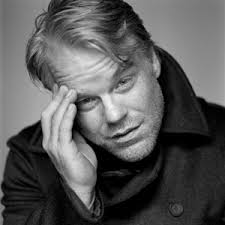
Death knows no timetable. It takes actors when they’re just gaining traction and more often when they’ve long since passed from public scrutiny. Death took Philip Seymour Hoffman, 46, in his prime from what is being reported as a heroin overdose. The Oscar-winner for “Capote” was branching out with each new film and, indeed, had plumbed new depths as the charismatic cult leader in “The Master.”
I sat down with Hoffman a couple of times and was, at each meeting, impressed by how low-key and self-effacing he was. What follows is a conversation at the Toronto International Film Festival, before he broke out with mainstream roles in “The Talented Mr. Ripley,” “Charlie Wilson’s War” and the latest “Hunger Games.” We would talk again a year later at the Sundance Film Festival when he was promoting “Love Liza” written by his older brother. In that downbeat drama he played a guy dealing with the loss of his wife by getting high — on airplane glue and gas fumes.
by Glenn Lovell
In a span of just under three years Philip Seymour Hoffman has been an obscene phone caller (in “Hap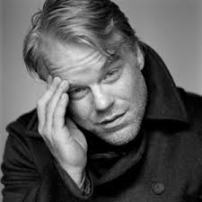 piness”), a New York drag queen (“Flawless”), a preoccupied male nurse (“Magnolia”), an obnoxious playboy (“The Talented Mr. Ripley”), an underground rock critic (“Almost Famo0us”), and, most notably, a painfully needy gofer for a San Fernando Valley porn merchant (“Boogie Nights”).
The New York-born, stage-trained actor has been so convincing in these beyond-the-fringe roles that his success has sort of backfired: Filmgoers don’t realize it’s the same Philip Seymour Hoffman in each role.
Hence, despite growing critical acclaim, Hoffman, 33, remains, to borrow the title of one of his vehicles, “almost famous.”
Pale and doughy-faced, he’s definitely not mainstream Hollywood’s idea of the classic leading man. But in David Mamet’s good-natured Hollywood-in-the-hinterlands lark “State and Main,” Hoffman is finally the “normal” guy who gets the small-town girl (Rebecca Pidgeon).
He plays Joseph Turner White, a timid but staunchly principled screenwriter who’s reluctant to participate in a Hollywood director’s cover-up, which has something to do with an amorous leading man (Alec Baldwin) and an underage local (Julia Stiles).
“That subplot probably won’t go over in some circles,” acknowledged Hoffman, nodding as he reached for his second cigarette of the interview. “But there is so much of this movie that’s so innocent ‒ like my story line.”
Which is a 180 for Hoffman, who heretofore has specialized in, well, more flamboyant personalities.
“I know, I know,” he agreed in that half-staccato, half mumble that has become his trademark. “This is your basic boy-meets-girl, boy-and-girl-fumble-over-each-other, boy-and-girl-eventually-kiss type of story. It’s really so sweet, so basic.”
Was this a conscious career move, to distance himself from those more oddball characters?
“Well, no,” replied Hoffman, who will next be seen in brother Gordy Hoffman’s “Love Liza,” about a man who copes with his wife’s death by sniffing airplane glue. “I’ve always felt the less recognizable you are, the better it is. Being a celebrity can be a good thing to a certain point. But, after a while, it can backfire.
“After a certain point, you don’t want your personality to precede you.” Hoffman figures that after nine years and approximately 60 films and plays, he’s now semi-recognizable. “I get recognized a helluva lot more now. That’s definitely changed. I deal with a certain loss of anonymity in my life, but it’s not so much that I don’t still have a life.”
For Hoffman, the bottom line remains: Serve the material, not your ego. Anything else, he sniffed, is “personality acting.”
“I think people have trouble attaching me to a particular performance because I try very hard to put the character who is on the page first, and try not to be myself I the film,” he explained.
“The approach is obviously working. No one would ever confuse his tornado-tracker in “Twister” with his pompous American abroad in “The Talented Mr. Ripley,” or with his portrait of “Creem” rock critic Lester Bangs in Cameron Crowe’s autobiographical “Almost Famous.”
“I really loved playing Freddie Miles in ‘Mr. Ripley,’ “ he said. “Freddie’s kind of an ass in the way he behaves, but he also is incredibly savvy and loyal to his friends. But I’ve been really lucky to play a lot of parts like that. They’re not big parts, but they’re nice parts, and there’s a lot you can do with them.”
As the upstairs drag queen in “Flawless,” Hoffman plays speech therapist to stroke victim Robert De Niro. It was a gutsy career move. Did agents and friends wave him away from the role, given the dangers of typecasting in the still relatively homophobic movie industry?
“No, I was the one waving me away from ‘Flawless,’ “ he replied. “I was cast in the part without even reading for it. Director Joel Schumacher said De Niro didn’t want to see me read, either. I was like, ‘There’s something wrong here.’ Because I wasn’t sure I could do the part. But I kept reading and re-reading the script and eventually I felt, ‘This is something I can do.’ So I went for it. I worked my buff off. It was scary.”
Most established actors would have shied away.
“Yeah, yeah ‒ I know. But being ‘typed’ wasn’t even a thought. I know who I am as a person. Who I am as Phil is extraordinarily clear to me. That all that matters ‒ my work, my art form.”
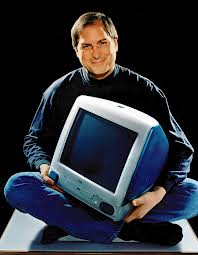 Christian Bale. Seth Rogen costars as Apple co-founder Steve Wozniak, the brainy Sancho Panza to Jobs’ big-picture Don Quixote



 CinemaDope
Richard Corliss (1944 – 2015): Critic as everyman
04/25/2015by Glenn Lovell
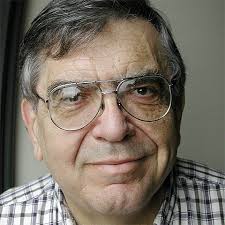
Richard Corliss, TIME mag’s longtime film critic, has passed away at age 71 from a stroke. He was easily one of the most authoritative yet least pretentious reviewers to occupy the aisle seat. Unlike pundits Pauline Kael and Andrew Sarris, known for their labyrinthine tangents, Corliss conversed easily with the reader as reliable friend. And thanks to TIME’s notorious space constraints, he mastered the pithy, precisely crafted three- to four-graph review that still somehow left us feeling satisfied.
I always found myself flipping through the back of TIME to get Corliss’s take on the latest by Scorsese (he loved “GoodFe llas”) or Richard Linklater (ditto “Boyhood”), and he never disappointed in either erudition or analysis, cynical disdain or clever wordplays. Along with Kenneth Turan of the L.A. Times, he was one of the only critics to sound off against the obscenely bloated “Titanic,” writing, “Ultimately, Titanic will sail or sink not on its budget but on its merits as drama and spectacle. The regretful verdict here: Dead in the water.” (He also slammed the Coens’ brilliant “Fargo” as mean-spirited, but, hey, we all have our blind spots.)
And when something caught his eye, he sang it praises like no one else. Quentin Tarantino’s “Pulp Fiction,” he wrote, “towers over the year’s other movies as majestically and menacingly as a gang lord at a preschool. It dares Hollywood films to be this smart about going this far. If good directors accept Tarantino’s implicit challenge, the movie theater could again be a great place to live in.”
Corliss, writing in Film Comment, on the depressing state of his profession:
“The long view of cinema aesthetics is irrelevant to a moviegoer for whom history began with ‘Star Wars.’ A well-turned phrase is so much throat-clearing to a reader who wants the critic to cut to the chase: What movie is worth my two hours and six bucks this weekend? Movie criticism of the elevated sort, as practiced over the past half-century by James Agee and Manny Farber, Andrew Sarris and Pauline Kael, J. Hoberman and Dave Kehr — in the mainstream press and in magazines like ‘Film Comment’— is an endangered species. Once it flourished; soon it may perish, to be replaced by a consumer service that is no brains and all thumbs.”
You can sample many of Corliss’s reviews at RottonTomatoes.com
Tags:Andrew Sarris, Boyhood, Film Comment, Kenneth Turan, Pauline Kael, Pulp Fiction, Richard Corliss, RottenTomatoes, Scorsese, Star Wars, StumbleUpon.com, Tarantino, Time Magazine, Titanic
Posted in Home | 1 Comment »